$68B
Pharma forecast ad spend in 2024, overtaking tech to become the second biggest-spending vertical in media
Key Takeaways
• Up to 95% of decisions are emotionally driven
• Behavioral biases shape HCP and patient decision-making
• Psychographic segmentation outperforms demographics alone
• Framing and loss aversion materially affect healthcare communications
• Audience insights improve ROI and campaign effectiveness
Between 23% and 50% of healthcare marketing spend underperforms. The problem isn't budget. It's a fundamental misunderstanding of how human beings actually make decisions and what audience insights can do to fix it.
Pharma forecast ad spend in 2024, overtaking tech to become the second biggest-spending vertical in media
of our decisions are made unconsciously, driven by emotion rather than logic
of that investment, up to $34 billion, consistently underperforms
Healthcare marketing has never been more competitive or more expensive. Pharma spend is forecast to reach $68 billion in 2024, overtaking the tech industry to become the second biggest-spending vertical in media. Yet studies consistently show that between 23% and 50% of that investment underperforms.
The problem isn’t with the budget level. There is a fundamental misunderstanding of how human beings make decisions, one that no amount of additional spend will resolve without better audience insights and a deeper understanding of behavioral science.
Most of us walk through life believing we are what economists call “econs,” rational, data-driven decision-makers who weigh up options and act in our own best interests. The reality is rather different. Up to 95% of our decisions are made unconsciously, driven by emotion rather than logic.
People don’t think what they feel, they don’t say what they think, and they don’t do what they say.
— David Ogilvy
This is as true of a consultant cardiologist reviewing treatment pathways as it is of a patient googling symptoms at midnight. Between the stethoscope and the smartphone, we are all operating with the same brain, one that has evolved over millions of years to conserve energy, avoid loss, and take shortcuts wherever possible.
Our brains process over 11 million pieces of information every second and consume 20% of our total energy doing so. To manage this load, we rely on what psychologist Daniel Kahneman described as System 1 thinking — fast, intuitive, largely unconscious — alongside the slower, deliberate System 2 thinking we use when concentrating or analyzing. Because System 2 is metabolically expensive, our brains have developed hundreds of heuristics and biases to help us make decisions with less effort. The catch is that these shortcuts can lead us to irrational conclusions.
Confirmation Bias
Patients don’t search for what might be causing their symptoms, but for evidence that confirms what they have already decided is wrong. They are not exploring possibilities, they are seeking validation. Audience research that accounts for this shapes content that actually meets patients where they are.
Anchoring Bias
Healthcare professionals, once trained in a particular treatment pathway, are slow to change. Their behavior is anchored to an established norm, regardless of new evidence. This is why a superior new therapy doesn’t automatically achieve immediate uptake; disrupting that anchor requires deliberate, sustained communications strategy.
Availability & Recency Heuristic
Information that is top of mind, because it was shared recently and repeatedly, is more likely to be acted upon. This is why field forces exist. Frequency of contact isn’t just commercial logic; it is neuroscience. A well-designed channel strategy exploits this directly.
One of the most actionable insights from behavioral science is that people are more motivated to avoid loss than to achieve gain. In a now-famous study, participants were presented with two public health scenarios carrying identical statistical outcomes: one framed in terms of lives saved, the other in terms of deaths avoided.
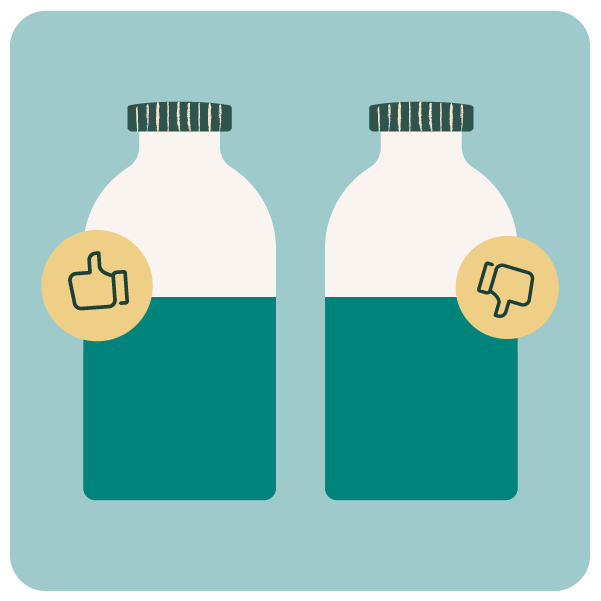
Chose the riskier option when framed as potential loss
Chose the riskier option when framed as potential gain
The facts were identical. The framing changed everything.
For healthcare marketers, this is not a manipulation tactic — it is a call to communicate more honestly about what is genuinely at stake for the patient or clinician who doesn’t act. It is also a case for investing in proper audience segmentation to understand which framing resonates with which segment of your audience.
Understanding human behavior in theory is one thing. Applying it in a real campaign, with real patients, real data, and real regulatory constraints, is another.

One compelling example comes from a project designed to support patients
living with atopic dermatitis, a chronic skin condition with significant
psychological consequences. The brief was to build trust between a major
pharmaceutical company and healthcare professionals by providing resources
to better support patients during consultations.
The market research process began with keyword data, which revealed that
patients’ most common information needs clustered around three themes:
alternative therapies, diet, and mental health. This was cross-referenced
with qualitative research among dermatologists and supported by survey data
showing that 83% of patients felt embarrassed by their skin condition.
Rather than segmenting by demographics, the team organized patients into
psychographic segments based on emotional need states, mapping social
listening data to their most primal motivations.
Messaging was crafted to meet each segment precisely where they were —
turning audience insights into genuine communication strategy, not just
demographic targeting.
When the campaign was extended to emerging markets, an assumption that could easily have been made i.e., that need states are universal, was tested against the evidence. Keyword data confirmed the same three content pillars were prominent across markets. But a review of social science literature revealed something important: stigma around mental health varied significantly by geography.
In markets where that stigma was higher, the messaging was adjusted. Rather than encouraging patients to talk to friends and family, communications acknowledged the difficulty of being understood by loved ones and redirected them more firmly towards healthcare professionals. Same insight, different application. Same goal, different route.
This is what a genuine communications strategy looks like in practice: not a universal campaign broadcast globally, but a thoughtful, evidence-led adaptation of core insight to local context. It requires audience research that goes beyond standard demographic market research and social listening tools that can surface the qualitative nuance that numbers alone cannot.
The approach described above can be distilled into a repeatable process, one that any healthcare marketing team can apply to their next campaign plan.
Step 1: Define the business objective
Begin with a clear brief tied directly to a measurable outcome; not a communications objective, but a behavior change objective.
Step 2: Examine current behavior & emotional context
Use market research, social listening tools, and first-party audience insights to understand not just what people do, but why and what emotional state underlies that behavior.
Step 3: Form a hypothesis
Identify what would need to change — cognitively, emotionally, behaviorally — and why the proposed intervention would drive that change. This is where audience segmentation earns its keep.
Step 4: Design and map the experience
Build the customer journey map across every touchpoint, from initial awareness through to the desired action. Ensure framing, channel strategy, and content format all serve the behavioral goal.
Step 5: Test rigorously before scaling
Isolate variables e.g. messaging, design, colour, UX, hanging one element at a time to draw reliable conclusions. Testing is not optional. It is the mechanism by which instinct becomes evidence, and the foundation of sustainable ROI measurement.
In a landscape where billions are spent and a significant proportion underperforms, the brands that will find an edge are those willing to invest in understanding their audience at a deeper level than demographics allow. Audience segmentation based on emotional need states, supported by rigorous market research and social listening tools, unlocks a quality of insight that standard demographic analysis simply cannot reach.
Behavioral science doesn’t replace creativity or marketing strategy, it makes both more effective by grounding them in how people actually think, feel, and act. For healthcare marketers navigating complex, sensitive, and highly regulated territory, that deeper understanding isn’t just a competitive advantage. It is the foundation of genuinely useful communication.
Up to 95% of our decisions are made unconsciously. That includes consultant cardiologists, not just patients.
Social listening data can surface the long-form, qualitative questions that keyword research misses — the emotional language behind a search query.
Psychographic audience segmentation by emotional need state outperforms demographic targeting for behavior change campaigns.
Blending quantitative keyword data with qualitative dermatologist interviews revealed the 83% embarrassment stat — the kind of audience insight that reframes an entire campaign.
Communications Strategy: Have you framed your message around loss avoidance rather than just gain?
Channel Strategy: Is your channel strategy designed around recency and frequency — not just reach?
Customer Journey Mapping: Does your customer journey map account for System 1 shortcuts at every touchpoint?
ROI Measurement : Are you measuring behavior change, or just impressions and clicks?
If you’d like support with your content strategy, we’re here to help. Contact us to talk through your needs.
Contact UsReferences: